TraceGains challenges European food industry to close the gap between AI ambition and digital readiness
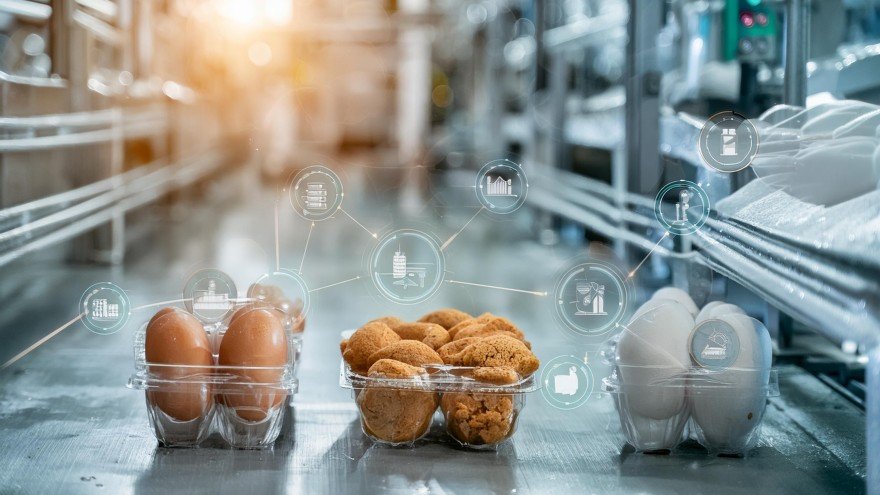
bron: FoodPro Network
TraceGains is highlighting the importance of connected, trusted data as the foundation for effective artificial intelligence (AI) adoption in the food and beverage (F&B) industry, following its recent appearance at Juice Summit 2026 in Brussels and ahead of a forthcoming presentation at FoodWorX 2026 in Amsterdam.
At both events, TraceGains is addressing a common challenge facing food manufacturers: while enthusiasm for AI is growing, many organizations lack the connected digital infrastructure needed to put it to practical use. Research presented by TraceGains indicates that 82% of F&B leaders consider technology adoption a strategic priority, yet only 6% have fully integrated systems. Meanwhile, 69% continue to rely on spreadsheets and email for essential business processes, with 29% reporting significant operational issues as a result.
“The industry is ready to invest in AI, but many businesses are not yet equipped to make the most of it,” said Bal Chand, European Marketing Leader at TraceGains. “The challenge is not a lack of ambition or ideas. It is that the information needed to make decisions is scattered across different systems, spreadsheets, supplier portals and specifications.
“Much of that critical data sits outside the organization, with suppliers,” he said. “Until businesses can bring that information together and trust what they are working with, the potential of AI will remain difficult to realize.”
At the Juice Summit, held last month in Brussels, Michael Lippens, Account Executive at TraceGains, joined the AI Best Practice Examples session to explore the gap between digital ambition and operational readiness. His presentation demonstrated why the effectiveness of AI depends less on the sophistication of the underlying model than on the quality, completeness and connectivity of the data supporting it.
“Using the TraceGains network of more than 120,000 supplier locations and 736,000 ingredients, Michael demonstrated how connected industry data can provide a foundation for more informed decision-making,” said Bal. “A live demonstration of our AI Formulation tool - developed as an AI-powered laboratory and workspace platform for NPD teams, combining real-time ingredient data, AI-driven formulation, and collaborative workflows - showed how AI can help narrow formulation options using relevant ingredient and supplier information, while leaving technical assessment and final decisions firmly in the hands of experienced formulators.
“The conversation around AI often focuses on what the technology can do in terms of accelerating research and development, time to market, and reducing risk, but we need to pay just as much attention to the information behind it,” said Bal. “AI can help teams explore possibilities, identify relevant options and work more efficiently, but it cannot compensate for incomplete, disconnected or unreliable data. Ultimately, AI is only as good as the product and ingredient data behind it.”
The discussion will continue at the forthcoming FoodWorX 2026, taking place November 24-25 in Amsterdam, where TraceGains will present Seeing Risk Sooner – How food safety leaders are building the visibility needed to respond with confidence. Bringing together themes of food safety, supplier risk, regulatory compliance, quality and AI, the keynote will explore how these interconnected challenges can be better understood when information is accessible across the business.
Using changes to regulations affecting smoke flavorings as a practical example, the session will demonstrate how a single regulatory development can raise questions across multiple functions; for example, which ingredients and products are affected, what alternative ingredients might be available, and what testing and assessment are required before a change can be approved.
The keynote presentation will show how connected supplier, ingredient, product and compliance information can help teams understand the potential impact of such changes, while AI can assist in exploring possible responses. Importantly, where information is missing, that gap must still be addressed, with specialists retaining responsibility for assessment and approval.
“Food safety, regulatory compliance, supplier management and product quality are often treated as separate responsibilities, but in practice they are closely connected,” said Bal. “A change involving one ingredient or supplier can have implications across several teams. Having the right information connected makes it easier to understand those implications, assess the available options and respond with greater confidence. AI can help accelerate that process, but it is trusted data and human expertise that make the resulting decisions meaningful.”
The presentation will challenge attendees to consider how effectively their own organizations can connect information when the next supplier alert, regulatory change or ingredient issue arises. Rather than relying on individuals to piece together information from disconnected sources, the aim is to demonstrate how greater visibility can support a more proactive approach to risk management.
“Both these event appearances reinforce a central message from TraceGains,” added Bal, “namely that successful AI adoption starts with connected, reliable data. As European F&B manufacturers look to improve operational efficiency, strengthen risk management and accelerate innovation, establishing that foundation will be critical to turning AI ambition into measurable business value.”
TraceGains is also inviting European food and beverage manufacturers to help establish how prepared the wider industry is to manage increasing complexity through its European Food & Beverage Digitalization Benchmark 2026. The independent survey examines digitalization across ingredient sourcing, supplier collaboration, regulatory compliance, quality and new product development. Manufacturers are encouraged to contribute their perspective and help build a clearer industry-wide picture of digital readiness across Europe.
Laatste nieuws
-
17 nov Rewe stopt met Pick & Go winkels blijft wel investeren in technologie
-
17 nov Mondelēz wil Grany en Cracotte verkopen
-
17 nov La Lorraine investeert 100 miljoen euro in Amerikaanse fabriek
-
17 nov Een fragmentarische aanpak vs. een geïntegreerde ERP-oplossing voor F&B bedrijven
-
17 nov TraceGains challenges European food industry to close the gap between AI ambition and digital readiness
-
17 nov Groenten- en fruitweegschaal met artificiële intelligentie
-
16 nov Marne Mosterd breidt uit met nieuwe productielijn
-
16 nov Auditklaar is geen project meer: wat onaangekondigde audits vragen van je QA-team
-
16 nov Voedingswinkels boeken iets meer omzet
-
16 nov Prijs plantaardige producten gestegen
Praat mee
Heeft u al een account? Dan kunt u
Inloggen
Heeft u nog geen account? Maak dan een account aan